
Why Music Still Matters: A Conversation with Rockomotiva
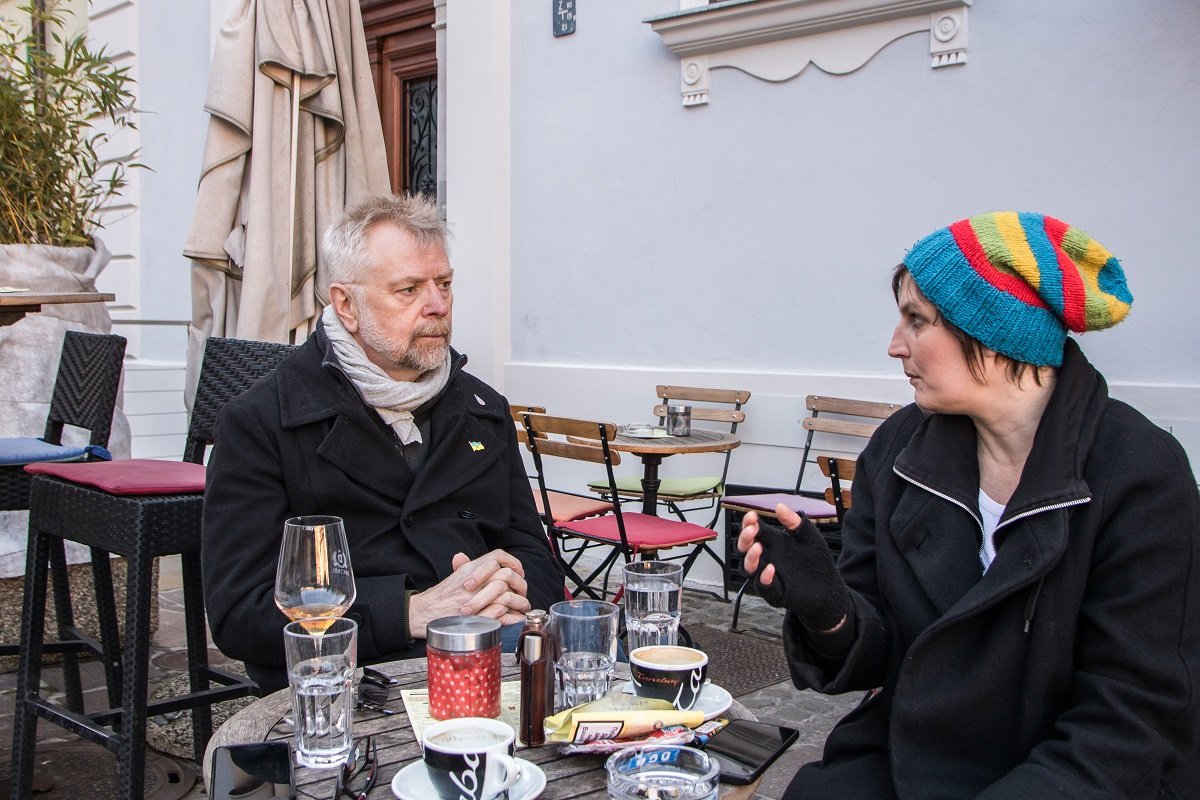
razgovarali: Ana Bjes & Bojan Božić
fotografisao: Bojan Božić
This conversation was originally published by the Balkan music publication Rockomotiva following my participation at MENT Ljubljana in Slovenia.
Rockomotiva has long been a thoughtful voice in the region, documenting artists, movements, and cultural shifts across the Balkans and beyond. I’m grateful to Ana Bjes and Bojan Božić for the depth of their questions and the care they brought to the conversation.
What follows is a full English translation of the original interview, adapted for clarity while staying true to the intent, tone, and structure of the original piece.
The conversation moves across a range of themes that continue to shape my work, migration, identity, the evolution of Seattle, the realities of today’s music economy, and the role of technology in shaping culture
Reflections on migration, Seattle, technology, cultural identity, and the future of artists
Darek Mazzone (KEXP/SAMA): Artists Need Babysitters
Interview by Ana Bjes & Bojan Božić for Rockomotiva
Originally published April 9, 2026
English translation/adaptation from original Serbian interview
Source:
Music videos undoubtedly revolutionized music by adding another creative and expressive dimension to it. Yet live performance remains unmatched. And when those performances are captured on screen, they can be even more compelling than the videos themselves.
I remember the first time, many years ago, that I saw a live in-studio session from the American radio station KEXP. I was immediately captivated by the format and eagerly awaited each new release. Soon came Tiny Desk, 2 Meter Sessions, and many other platforms with similar concepts.
The team at KEXP, based in Seattle, does exceptional work. Yet among them, Darek Mazzone stands out—through the warmth and radio-ready depth of his voice, capable of putting listeners into an instant state of calm, as well as through the breadth of his work: host, producer, DJ, marketing strategist, communications expert, and technology specialist. The list of his interests and roles is long. Thanks in no small part to him, KEXP has become what it is today.
Mazzone is also the founder of the nonprofit organization SAMA: Music + Art, dedicated to cultural exchange, discovery, connection, and presenting new music and its creators.
Until now, I had only ever seen and heard him through KEXP’s live studio sessions. But when I learned he would be attending MENT Ljubljana, I knew this was an opportunity not to miss. Despite packed schedules on both sides, we managed to sit down together. A true cosmopolitan, someone who respects tradition while remaining fully open to what is new, Darek listened carefully, answered thoughtfully and candidly, and shared many useful insights along the way.
You were born in Poland, have an Italian surname, moved to Boston, and eventually ended up in Seattle. How did that happen?
Darek:
It’s complicated.
Life in Poland during the 1970s was very difficult. My mother, a single woman with a wandering spirit, traveled to Boston. She was a beautiful Polish woman, met an Italian man, and suddenly I became the whitest member of a Southern Italian family.
That happened when I was nine years old, and they married two years later.
Do you remember your childhood in Poland?
Darek:
Yes, I do.
At that time I didn’t speak any English at all. When I arrived in Boston, the first word I learned was “thank you”—a very important word—and shortly after that, “you’re welcome.”
I didn’t understand the new culture, customs, or lifestyle. It was all very comedic in hindsight. One day I may make a film about it.
Before that, I had never spent time with Black people, but my first friend in Boston was Black. His family introduced me to funk, soul, disco…
It was an incredible experience.
In Poland I listened to communist-era popular music and folk music—you have similar things in your country. But I was also hearing music from Vietnam, Laos, Russia, East Germany, the entire communist bloc.
Then I arrived in Boston…
And suddenly I was in a completely new, wild world.
From Boston to Seattle—how and why?
Darek:
Shit…
I was engaged, but the engagement ended. When your heart is broken in your twenties, it feels like opera.
My best friend was also going through a divorce, so we said: we need to get out of Boston.
We bought a van and drove across America.
The van broke down in downtown Seattle.
It felt like the universe telling us we had to stay.
I started listening to the radio, got a great job, and met the woman who is now my wife.
Seattle in 1982 was fascinating: grunge was emerging, technology was rapidly developing, and the city was still affordable.
Rent was cheap enough that you could work in a café, play in a band, write poetry—do all of it at once.
Can you compare Seattle then and now?
Darek:
Many bands come to Seattle now and look around asking, “Grunge came from here?!”
Well—it doesn’t anymore.
Seattle is now one of the wealthiest cities in the world after an unimaginable transition.
I love it. It’s a beautiful place to live. But major changes happened.
A key turning point came in 1995 when Microsoft dramatically increased and split its stock. Suddenly a lot of people became rich.
Overnight you had a bunch of nerds driving Porsches and BMWs.
That created tectonic changes.
Then Amazon and Starbucks rose as well.
There is still an interesting music scene, but much of it has moved outside Seattle—to Tacoma, Olympia, Everett, and surrounding areas.
The city now has a very different vibe.
Seattle also has a large immigrant population, and that hybridization is fascinating.
It’s hard to imagine something like grunge happening again because the critical mass that made it possible no longer exists.
When punk was rising in the 1980s, nobody cared about Seattle.
When I decided to stay there, people asked me, “Why? Do you want to become a lumberjack?”
Aside from nature, the airport, and airplanes—there wasn’t much there.
You mentioned immigrants in Seattle. One of them is our own Srđan “Gino Banana” Jevđević.
Darek:
Oh yes—my dear friend Gino Banana!
We noticed he appeared on KEXP.
Darek:
Gino was one of the first people I met in Seattle.
Seattle is known as a sanctuary city.
When the war in Yugoslavia happened, many people from Bosnia, Croatia, and across the Balkans came to Seattle.
That included Gino, who founded Kultur Shock there.
That whole scene is fascinating.
In the 1990s, when grunge was exploding, many bands moved to Seattle from Los Angeles, New York, and elsewhere with the idea:
“Let’s go to Seattle and get discovered.”
How do you like Kultur Shock’s music?
Darek:
It’s fantastic.
I released one of Gino’s acoustic records on my label.
I love acoustic music—he prefers heavier sounds.
I tell him the heavy stuff is great, but acoustic is sevdah, and sevdah needs room to breathe.
I came here to discover interesting bands and find ways to bring them to Seattle.
Seattle is a great city—but not yet one of the great global music destinations.
That needs to change.
How has Seattle’s scene changed since the 1990s?
Darek:
Dramatically.
Musicians, promoters, venues—everyone is fighting to survive.
After COVID many people simply stopped going out.
My daughters are teenagers and their generation still goes out. But people in their 30s, 40s, 50s, and 60s stay home more. Many are increasingly depressed.
People are also drinking less—which is both good and bad.
Venues are under enormous pressure.
Here in Europe, many clubs receive government support.
That does not happen in America.
In the U.S., you survive or you don’t.
And yet venues are essential if you want a scene.
Some things remain strong: Seattle has an exciting jazz scene thanks to music schools. Electronic music is healthy.
Rock is no longer dominant.
Seattle’s economy changed radically.
We need to make the city affordable again.
At this point in my life I can speak to governors, mayors, senators—I can advocate at higher levels.
That’s one reason I started SAMA.
KEXP is powerful and influential, but I wanted to build something that could help bring artists to Seattle.
The dirty truth of this industry is:
It’s fucked.
Artists do not make enough money.
People do not buy albums.
Streaming services do not solve this.
We are in a transition period and must figure out how to reconnect the people who love music with the people who create it so artists can survive.
Nobody wants to seriously talk about that yet.
How does today’s political climate affect music?
Darek:
Not fully yet—but it will.
Right now people are still focused on survival.
Wars, financial instability, AI—all of it affects music.
People are angry and looking for solutions.
But much depends on where you live.
I live in a very progressive city.
New York, Seattle, Boston, San Francisco, Los Angeles—there is energy there.
Elsewhere, not so much.
But I hope people in those places find opportunities to organize and build something meaningful.
Many new genres seem engineered rather than organic. Are musicians losing the battle for authentic expression?
Darek:
About fifteen years ago they invented the term “EDM.”
That was marketing.
A way to make money.
A lot of people suddenly said:
“Okay, we’ll call our music EDM and the money will come.”
Now new genres appear constantly because there are no gatekeepers anymore.
But what excites me most is this:
Young artists are increasingly interested in where they come from.
For years—especially after the Berlin Wall fell—musicians didn’t care where they were from.
Everyone wanted to sound like The Cure.
Now I meet artists trying to understand their roots and reinterpret them.
I’ve seen it in Estonia, Poland, Morocco…
They may play rock, electronics, anything—but the music still tells me where they are from.
It isn’t imitation.
It feels like the beginning of something new.
We are in a chrysalis stage.
When it opens, we will see what emerges.
Chris Eckman and Glitterbeat Records support local-rooted artists. SAMA seems similar.
Darek:
There are two sides to SAMA.
“Sama” means both “gathering” and “listening.”
I love music, and I want to help musicians survive.
I also want to help people improve their lives by going to concerts and cultural events.
That benefits both society and the economy.
Some colleagues and I helped produce an economic study on Seattle’s music industry.
We discovered the music economy generated more money than the city’s port.
That got us invited into real policy conversations.
You must be serious if you want change.
I don’t want to spend my life doing what I did in my twenties.
I’m older now. Wiser. Better connected.
I want to help build something meaningful.
What about computer-made music, rhythm machines, spoken word—does that count as “real music”?
Darek:
That’s a hard question.
Technology has always shaped music.
Even the saxophone was once new technology.
My main work outside radio is tied to technology.
I own many records. On the back of Van Halen’s first album it says:
“No synthesizers were used on this record.”
At the time people thought synthesizers weren’t real music.
Then drum machines replaced rhythm sections.
Then loopers arrived.
Recently I asked a musician friend if a looper is even an instrument.
We are entering a new world.
Musicians will create radically new music, possibly with robots.
That may be good or bad.
But they will use new tools.
It is easy to become a grumpy old critic.
I refuse to do that.
Do you still believe in music?
Darek:
Absolutely.
You do not need to understand music to feel it.
You can hear an artist from a country you’ve never heard of, singing in a language you don’t understand, playing instruments you’ve never seen—
—and still love what they are doing.
That’s the power of music.
Do you believe in DJing the same way?
Darek:
Of course.
DJing gets people moving. It creates energy.
As a DJ, my goal is to help people like themselves.
That’s the whole point.
What do you play?
Darek:
Everything.
I used to travel with crates of vinyl.
When I first came back to Europe I carried records everywhere.
My then girlfriend, now wife, thought I was insane.
Now I carry a two-terabyte USB stick.
I can play anything.
Though these days I prefer opening sets.
I like setting the tone.
Touring and nightlife can be brutal—look at Avicii.
Darek:
Exactly.
This connects to another major issue.
Artists need support systems.
Managers. Booking agents. Babysitters.
People who help them function.
If artists don’t make money, none of those people make money either.
We need a model that supports the entire ecosystem.
I was recently at a showcase festival in Bulgaria.
A great band played brilliantly.
The next day they missed their industry meetings because they got drunk.
Why?
Because no one was there to take care of them.
Was KEXP a pioneer of live YouTube sessions?
Darek:
Yes, among the earliest.
I was always “the uncle” of KEXP.
I worked in marketing, built campaigns, worked with Microsoft and others.
My vision was to help build the radio station of the future.
When we started putting sessions on YouTube, the platform was nearly dead.
People asked:
“Why are you uploading video to YouTube? You’re a radio station.”
In the first year maybe ten bands agreed to do it.
Now everyone wants to.
Back then nobody understood what we were building.
Do you think this format will eventually become outdated?
Darek:
Absolutely possible.
Never bet on permanence.
This is a time to keep watching what comes next.
Remember MySpace?
People thought it would last forever.
Then, gone.
Spotify is another example.
People are angry at Spotify now.
But Spotify was never a music platform.
It was never about music.
It is an advertising distribution system.
At least they were honest about that.
Tell us about Tashkent Park Creative.
Darek:
That’s my creative agency.
Sometimes it’s just me.
Sometimes it’s a hundred people depending on the project.
I’ve worked in startup development for years.
I love helping people build things differently—better, more revolutionary.
I live across from Tashkent Park in Seattle.
One of Seattle’s sister cities is Tashkent.
I needed a name and chose Tashkent Park Creative.
It sounds like a DJ project.
Through it I can do work in refugee camps, China, creative consulting—whatever the project requires.
I like flexibility.
Your thoughts on Ljubljana and MENT?

Darek:
Ljubljana is beautiful.
Walkable. Human-scale.
The venues are excellent, especially Metelkova.
Ljubljana Castle is phenomenal.
I stayed extra days after MENT because I wanted to explore more.
I’ll definitely return.
How do you compare American and European music scenes?
Darek:
DJ culture and electronic music are much stronger here.
Europe has many languages, deep histories, classical traditions, folk traditions.
It is the “old world.”
America is the “new world.”
Streaming changed everything.
It gave everyone access to everything.
That matters especially in smaller countries.
Because dominant cultures can swallow smaller ones.
When I visited Belgrade, I saw less local culture than I expected.
Large cultures flatten smaller ones if we are not careful.
Some fear smaller nations and cultures may disappear.
Darek:
No.
They won’t disappear.
They will evolve.
I see that constantly in the artists I bring to Seattle.
My first audience is often immigrants.
When I brought Estonian duo Puuluup to Seattle, Estonians living in America came to the show.
The band said:
“It feels like talking to our grandparents.”
Diaspora communities preserve identity differently.
Culture shifts.
Language shifts.
Perspective shifts.
But music helps people reconnect emotionally.
That is powerful.
Final Thoughts
If you want to work in music, you must be able to feel it.
At MENT I saw many musicians obsessed with virtuosity.
Just because you can play every note quickly doesn’t mean you should.
Some simply “masturbate on the guitar.”
That doesn’t feed people.
That doesn’t connect people.
I search for music and artists who can truly connect with audiences.
And when I find that in a culture or language I barely understand—
it restores my faith in humanity.
Credits & Original Publication
This interview was conducted by Ana Bjes and Bojan Božić and originally published in Serbian by Rockomotiva on April 9, 2026.
The English version presented here is a translated adaptation for broader accessibility, with care taken to preserve the meaning and spirit of the original conversation.
Read the original article (Serbian):
ORIGINAL